Case study
Three businesses that run on a portal we built.
A construction company, a fire door company and a property management company, all in the past few months. Each portal was built in weeks around how that business works, and each belongs to the business that runs it.
None of them started as a software problem. Each started as a question about how work moves through the business, answered on paper with the people who do the work before anybody wrote anything.
A construction company
What they needed
The building was never the problem. It was everything around it. The day on site arrived in the office as messages and photographs that somebody had to turn into a report for the client. Drawings came back marked up. Valuations were put together by hand. The person who knew where everything was could never take a Friday off. The idea that fixed it fits in one sentence: everything that reaches the business is a communication, a person makes one decision about it, and the portal groups it and writes what has to be written.
What runs on the portal now
- Every project
- at the stage it is really at, with the decisions that need the owner listed beside it.
- 13 weeks
- of cash ahead, read from the bills and invoices in Xero, with the lowest week flagged.
- One decision
- per email, photograph or drawing that arrives. The portal files it and writes it up.
- Their own AI
- reads a job or raises a request from the assistant the team already use.
A fire door company
What they needed
A fire door company lives on proof. Every doorset has to be surveyed, every inspection recorded and every certificate to hand the day the building owner asks for it. The quote, the job and the invoice have to agree without anyone typing the same thing three times.
What runs on the portal now
- Every doorset
- on its own record, from the survey through each inspection to the certificate.
- Quote to job
- a survey becomes a quote and an accepted quote becomes the job, in step with Xero.
- The handover pack
- put together from the job’s own records, with the certificates in it.
- Their own AI
- reads a job, raises a to-do or files an email from the assistant the team already use.
A property management company
What they needed
A property management company is judged on response. A fault is reported, a visit is booked, the work is done and proved, and the certificate, the invoice and the key all have to be where they should be, whoever was on the road that day.
What runs on the portal now
- Every property
- with its tenants, its certificates, its keys and the jobs on it in one place.
- Every visit
- booked, done and recorded by the team on the road, photographs and receipts included.
- Invoiced from the work
- work orders, valuations and variations become the invoice in Xero without being retyped.
- Their own AI
- answers what needs them today and raises the to-do, from the assistant the team already use.
The portal
The construction company's portal, screen by screen.
Taken from its demo copy, so every name, address and figure is invented, but the screens are the ones the team work in.
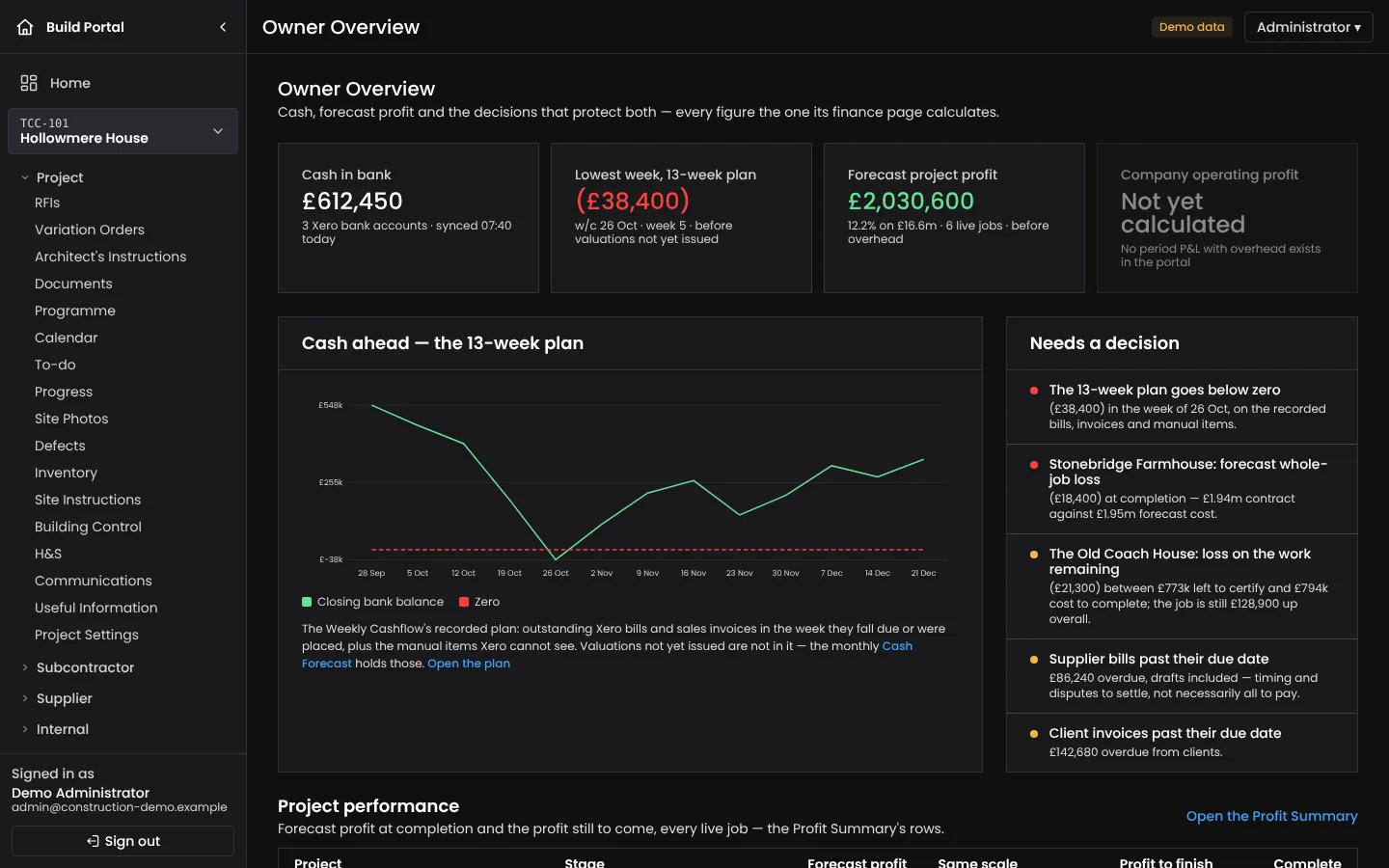
Owner Overview
Cash in the bank, the lowest week of the next thirteen and the forecast profit on every live job, with the decisions that need the owner listed beside them.
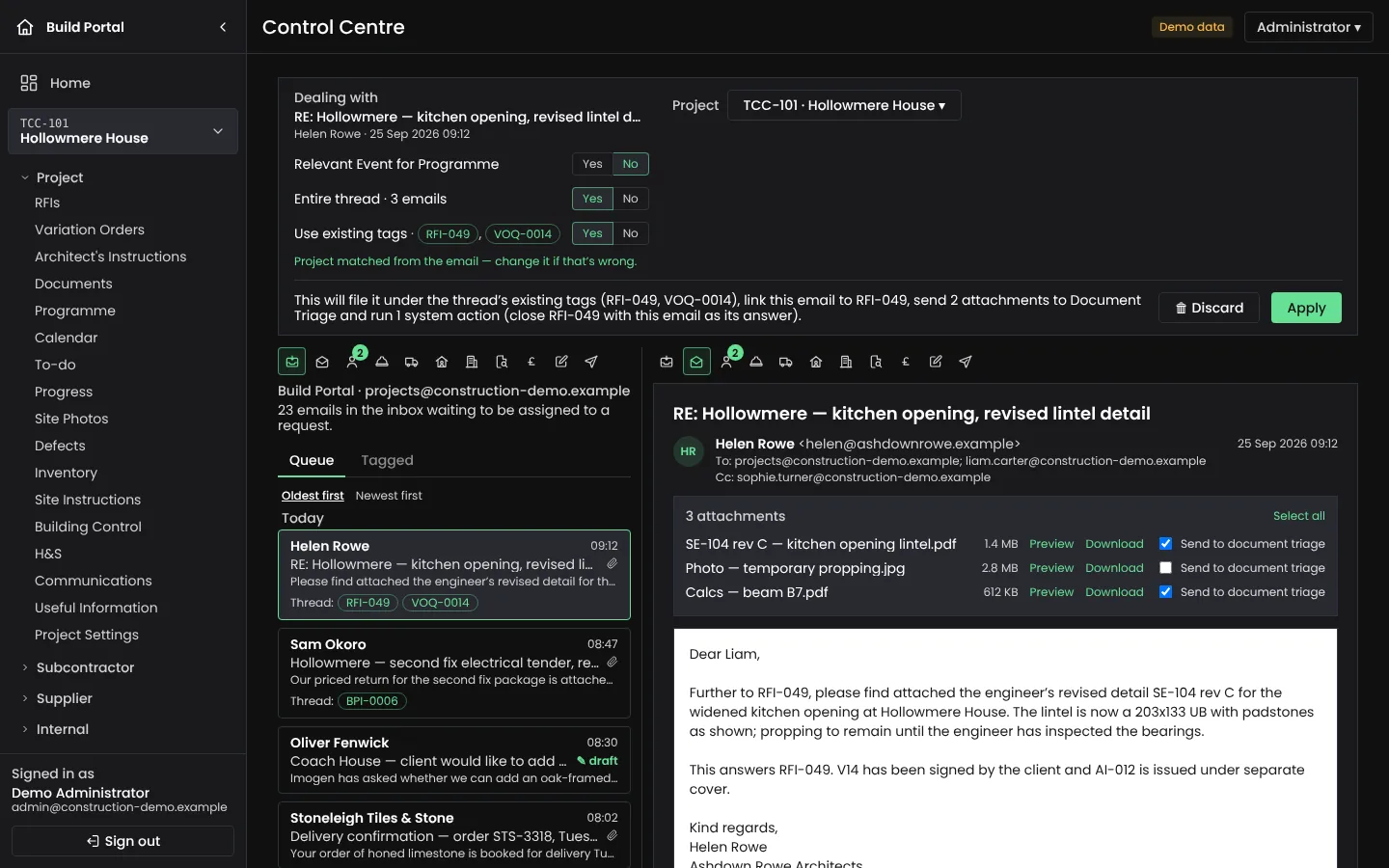
Control Centre
Every email to the projects mailbox lands here. The portal matches it to its project and its RFI or variation, and one person decides what happens to it.
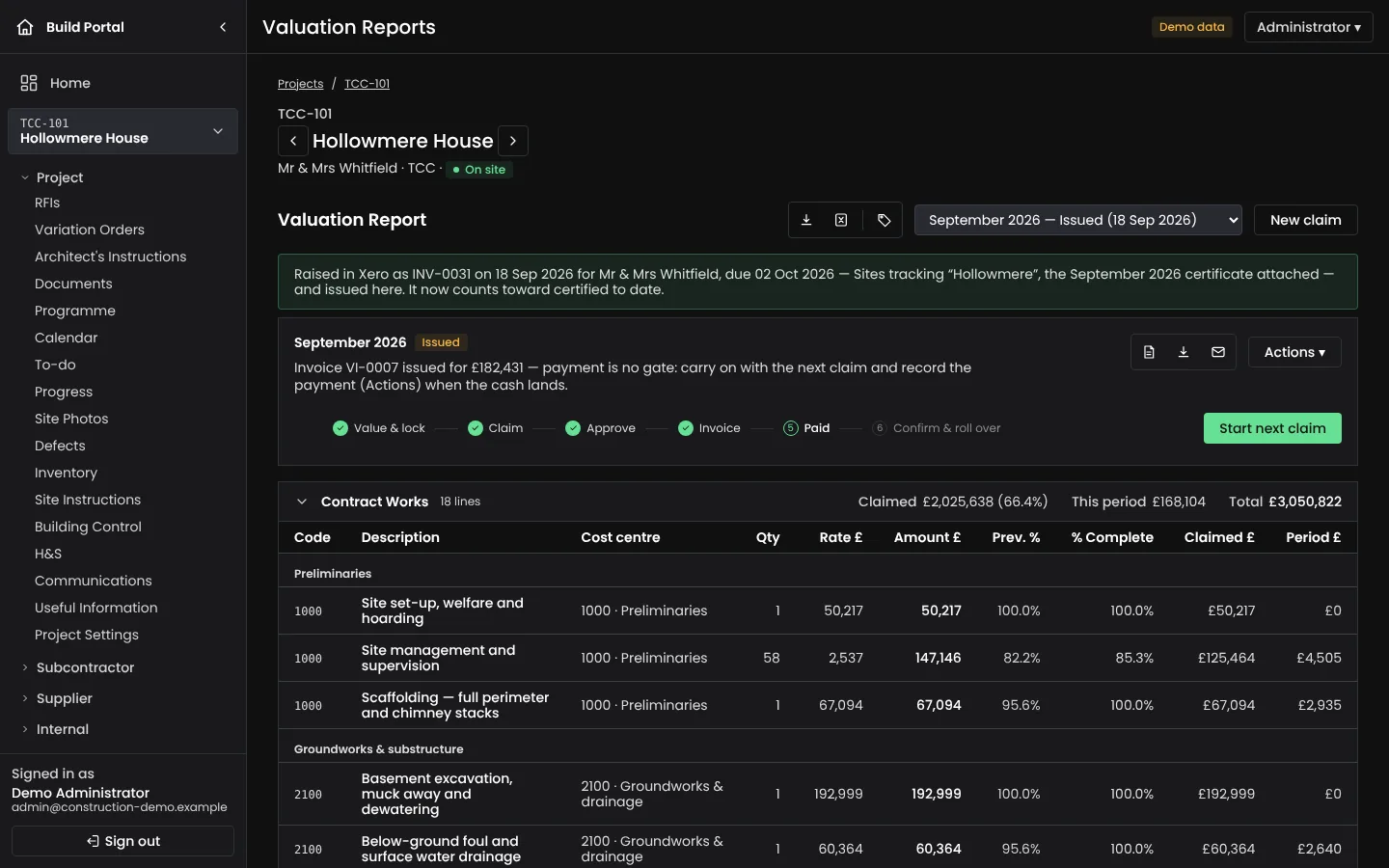
Valuation
The monthly claim line by line, from valued and locked through to invoiced in Xero and paid, without a spreadsheet.
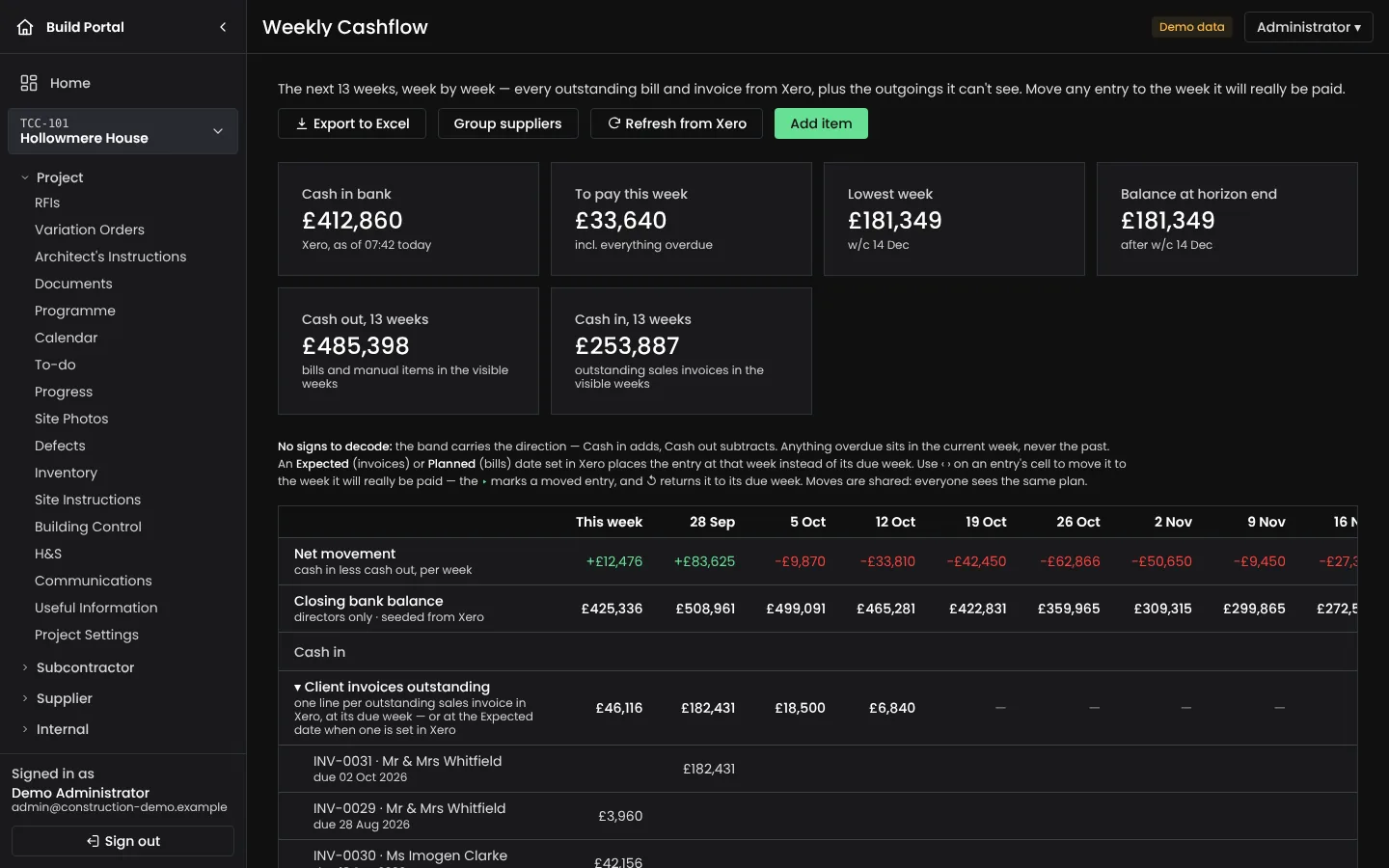
Weekly Cashflow
Thirteen weeks ahead, read from the bills and invoices in Xero. Move an entry to the week it will really be paid and everyone sees the same plan.
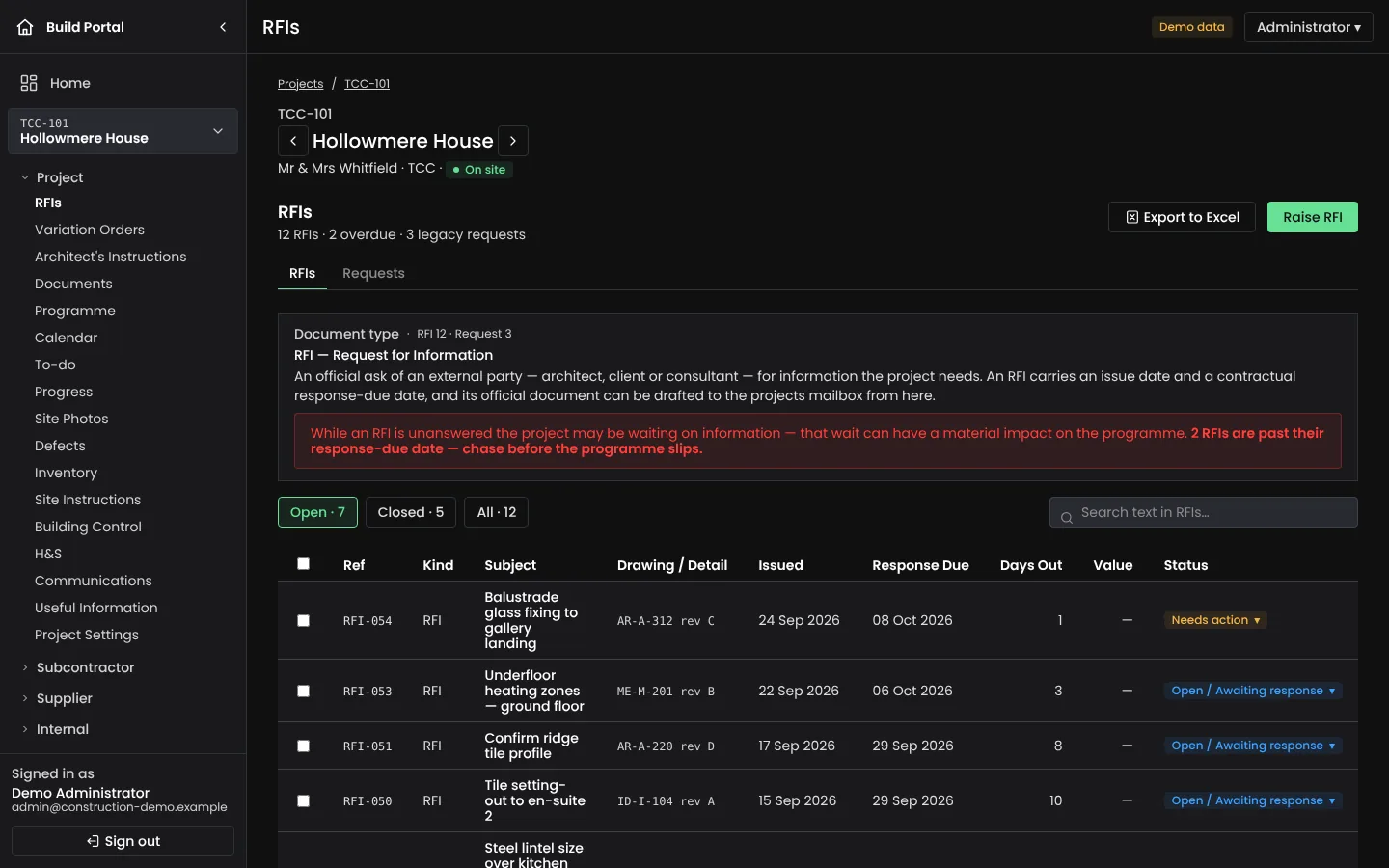
RFIs
Every question put to the architect or the client, with the date its answer is due. The overdue ones are flagged before they hold up the programme.
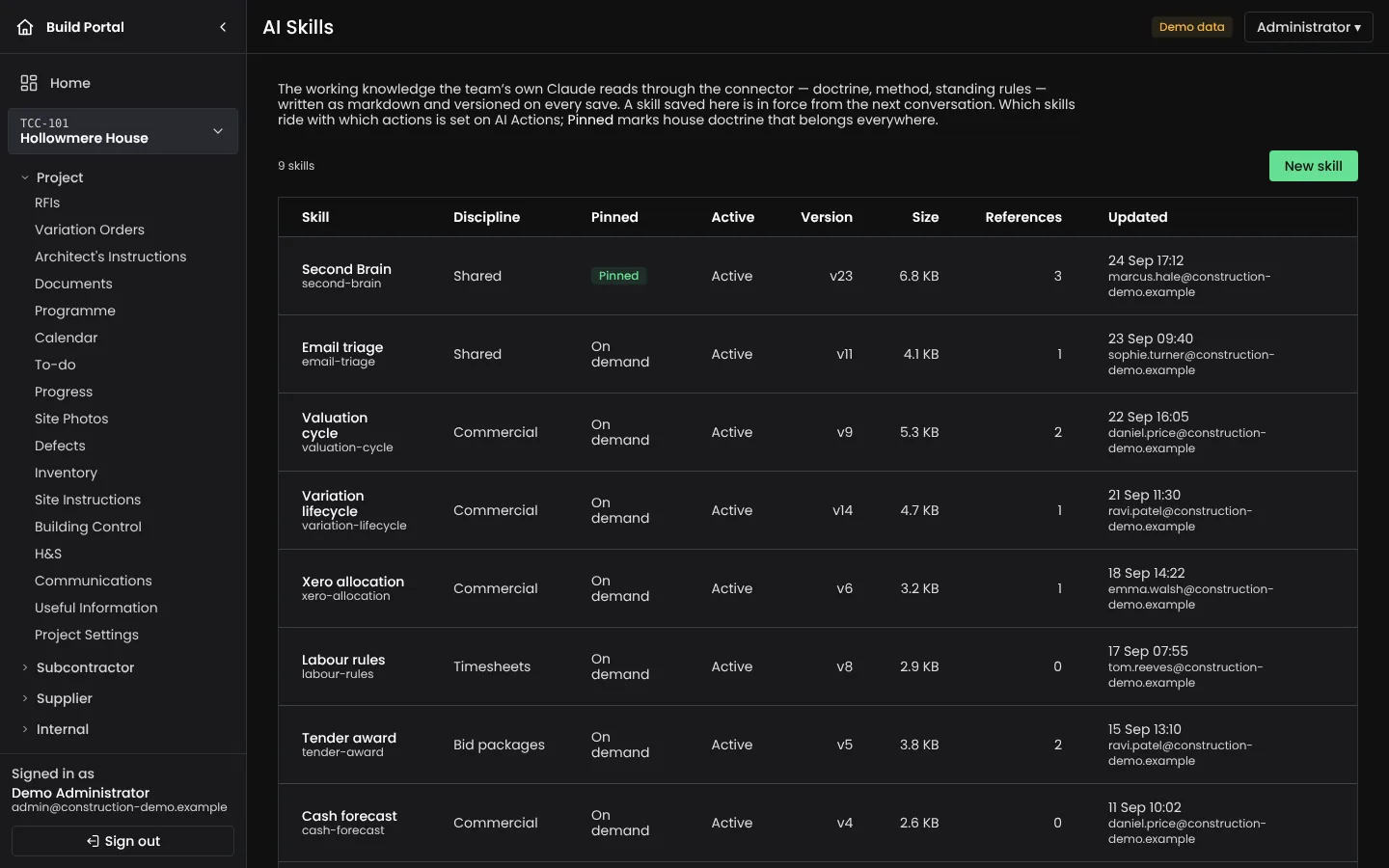
AI Skills
How the team works, written down for their own Claude to follow. They change a skill here and it is in force from their next conversation.
How each one was built
The same way every time.
A week with the people who do the work, mapping what arrives and what goes out. A proof of the idea in code before anything is committed to. Then live, and grown a piece at a time, each piece in use before the next is started. Their own AI assistant is connected to the same roles as the screens, so the team work from the assistant they already use.
Today we do it in 2–4 weeks. The seven steps are on the offer page.
How an engagement worksTell us about your business.
A free conversation about what your business does and where the time goes. We tell you honestly whether an app would pay for itself, and there is no pitch deck.
Book your free discovery call